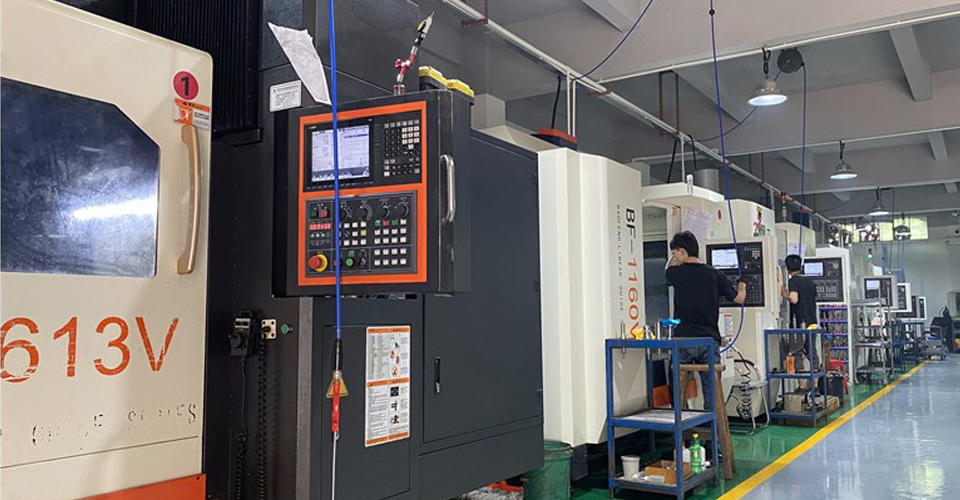
LJZ provides custom CNC turning services for shafts, bushings, pins, sleeves, spacers, threaded components, precision fittings, and other rotational parts. We machine metals and engineering plastics and support one-off prototypes, low-volume orders, and repeat production. For small, slender, complex, or high-volume components, LJZ uses Japan STAR Swiss-type machines. Conventional turning, Swiss machining, and secondary milling are selected according to part geometry, material, tolerance, and order quantity. Send us your 2D drawing, 3D CAD file, material, quantity, tolerances, surface finish, and inspection requirements for an engineering review and quotation.
What is CNC turning?
CNC Turning is a machining process primarily used to manufacture cylindrical parts like china cnc turned components, which is a highly precise and demanding subtractive machining process for precision cnc turning suppliers. It involves placing the cutting tool against a turning workpiece to remove materials and give the desired shape, a technique mastered by professional China CNC turning parts suppliers to ensure exceptional precision. Pieces of material (a piece of relatively rigid material, such as metal and plastic) are held in a chuck as a machine tool is fed to the piece to cut away excess material to produce the desired shape with precise diameters and depths.
LJZ CNC, a leading china cnc turned components suppliers, is a professional cnc turning parts supplier dedicated to providing premium turning services China, and we can provide you with relevant high-precision machining services for China CNC turned components backed by the expertise of a specialized China CNC precision turning parts factory. As a reliable turned parts manufacturer china, we combine advanced equipment with skilled engineering to deliver precision components for diverse industrial applications.
Capabilities at a Glance
LJZ provides CNC turning services for prototypes, low-volume orders, and repeat production. Our team manufactures shafts, pins, bushings, sleeves, spacers, threaded components, fittings, and other rotational parts from metals and engineering plastics.
Our available operations include external and internal turning, face turning, boring, drilling, knurling, reaming, grooving, threading, hard turning, and tapered turning. Secondary milling can be added when a turned part requires flats, slots, side holes, or other off-axis features.
For small, slender, detailed, or high-volume components, LJZ uses Japan STAR Swiss-type machines. Our stated average Swiss CNC production capacity is 1,000,000 pieces per month.
Capability Available Support
Part types Shafts, pins, bushings, sleeves, spacers, fittings, and threaded components
Operations Turning, boring, drilling, reaming, grooving, threading, knurling, and tapered turning
Materials Aluminum, stainless steel, steel, brass, copper, titanium, and engineering plastics
Production stages One-off prototypes, low-volume orders, and repeat production
Inspection documents Material reports, FAI, CMM reports, PPAP, FMEA, and customer-specified reports
Learn more about our CNC Swiss machining capabilities for small and slender components.
Choose the Right Machining Route
The appropriate machining route depends on part geometry, material, tolerance, secondary features, and order quantity. LJZ reviews the complete drawing before selecting conventional turning, Swiss-type machining, or a turning process combined with milling.
Process Suitable Part Characteristics Typical Parts
Conventional CNC lathe Rotational parts with external diameters, internal diameters, shoulders, tapers, grooves, or threads Bushings, sleeves, spacers, fittings, and general shafts
Swiss-type machining Small, long, slender, detailed, or high-volume components Precision pins, slender shafts, threaded parts, and small complex components
Turning with secondary milling Turned parts that also require flats, slots, cross holes, or other non-rotational features Connectors, fittings, and shafts with milled features
Swiss-type machines support the workpiece close to the cutting area, making this process suitable for long or slender components. The machines can also perform operations such as cross-tapping, slotting, and back drilling.
A conventional lathe may be more suitable when most critical features are concentric with the central axis. If the design includes several off-axis features, LJZ may use CNC milling as a secondary operation.
Final process selection is confirmed after reviewing the 2D drawing, 3D CAD file, material, critical tolerances, and production quantity.
Part Selection Guide
Different types of cnc turning components require different dimensional and inspection priorities. Providing these requirements at the quotation stage helps LJZ evaluate machine selection, process steps, inspection methods, and production feasibility.
Part Type Features to Identify on the Drawing Information Required for Review
Shafts External diameters, shoulders, grooves, threads, concentricity, and runout Material, length, critical diameters, tolerances, and quantity
Pins Diameter, length, end geometry, chamfers, and grooves Material, dimensional tolerances, hardness requirements, and quantity
Bushings Internal diameter, external diameter, length, and wall thickness ID and OD tolerances, material, fit requirements, and quantity
Fittings Internal or external threads, cross holes, grooves, and external profiles Thread specification, material, finish, tolerances, and quantity
Sleeves and spacers Internal diameter, external diameter, length, and end faces Material, dimensional tolerances, fit, and inspection requirements
Complex turned parts Multiple diameters, slots, side holes, flats, and back-working features Complete 2D drawing, 3D CAD file, material, and annual demand
Parts with most critical features positioned around a central axis are generally suitable for turning. Components with additional slots, flats, or side holes may require secondary milling or Swiss-type machining.
Product photographs can remain below this section. Link the image area to the machined parts gallery rather than adding another promotional paragraph.
Benifits of Our CNC Turning Service
One-off rapid prototype part can be created as fast as in one day
Long-term run high volume CNC turning production
ISO 9001 Certified
PPAP and FMEA for automotive clients
Automatic machinery, experienced engineers, and 100% QC assurance
Video of CNC Turning
CNC Milling vs CNC Turning: Which Process Fits Your Part?
Turning and milling remove material in different ways. The correct process depends on where the critical features are located and how the workpiece must be held.
Turning Milling
The workpiece rotates while a cutting tool removes material The cutting tool rotates while the workpiece is held in position
Suitable for cylindrical and rotational features Suitable for flat surfaces, pockets, slots, and non-rotational geometry
Common for shafts, pins, bushings, sleeves, and fittings Common for housings, plates, brackets, and complex profiles
A component may require both processes. For example, a shaft can be turned to produce its diameters and shoulders, then milled to add flats, slots, or side holes. LJZ reviews the complete part rather than selecting a process from the general shape alone.
CNC Turning FAQs
What tolerances can LJZ evaluate for turned parts?
For many precision components, tolerances around ±0.01 mm may be achievable. Actual capability depends on the material, dimensions, geometry, wall thickness, feature relationships, and inspection method. Critical diameters, concentricity, runout, roundness, threads, and surface roughness should be identified on the drawing.
What parts are suitable for turning?
Turning is suitable for components with rotational or cylindrical features, including shafts, bushings, pins, sleeves, spacers, threaded components, and fittings. Parts with slots, flats, or side holes may require secondary milling or a combined machining route.
What materials can LJZ machine?
Available materials include aluminum, stainless steel, carbon and alloy steel, brass, copper, titanium, and engineering plastics such as POM, nylon, PEEK, and ABS. Provide the complete material grade when requesting a quotation.
What is the difference between CNC turning and Swiss machining?
Conventional CNC turning is widely used for general cylindrical parts, while Swiss machining is particularly suitable for small-diameter, long, slender, or highly detailed components. Swiss machines support the workpiece close to the cutting area, which can improve stability during machining. For high-volume precision parts, Swiss machining may also reduce handling by completing multiple features in one machining cycle.
Can LJZ support both prototypes and production orders?
Yes. LJZ supports one-off prototypes, low-volume orders, and repeat production. Prototypes can be used to verify dimensions, fit, material, and design details before production. Lead time is confirmed after the drawing, material, quantity, and secondary processes have been reviewed.
How is CNC turning service price calculated?
Price depends on material, part size, geometry, machining time, tolerance, quantity, tooling, surface treatment, heat treatment, inspection, and documentation requirements. There is no single standard price for all CNC turning parts.
What should I provide for a quotation?
Please provide a 2D technical drawing, 3D CAD file, material grade, order quantity, critical tolerances, surface roughness, thread specifications, heat treatment, surface finish, inspection documents, and required delivery date. Complete project information allows LJZ to evaluate feasibility, process selection, lead time, and cost more accurately.
Our CNC Turning Available Materials, Tolerances and Finishing Options
LJZ machines metals and engineering plastics for precision turning projects. Material selection should be based on the required strength, corrosion resistance, weight, wear performance, temperature, electrical properties, dimensional stability, and operating environment.
Material Family: Aluminum, Stainless steel, Carbon and alloy steel, Brass and copper, Titanium, Engineering plastics
Materials Listed by LJZ: Machinable aluminum alloys, Machinable stainless steel grades, Carbon steel and steel alloys, Brass and copper alloys, Machinable titanium alloys, POM, nylon, PEEK, ABS, and other machinable plastics
Available Finishing Examples:
Anodizing, hard anodizing, plating, electrophoresis, polishing, and laser engraving
Passivation, polishing, plating, and laser engraving
Blackening, plating, polishing, QPQ, and heat treatment
Plating, polishing, and laser engraving
Anodizing, polishing, and laser engraving
Finish requirements are reviewed according to the selected plastic and application
Where no individual tolerance is specified, LJZ normally applies DIN ISO 2768-1 fine general tolerances to metal CNC machined parts and DIN ISO 2768-1 medium general tolerances to plastic parts where appropriate.
For many precision turned components, tolerances around ±0.01 mm may be achievable. This is not a universal tolerance for every feature. Actual capability depends on material, part size, geometry, wall thickness, feature relationships, machine selection, and inspection method.
Critical diameters, concentricity, runout, roundness, threads, and surface roughness should be clearly marked on the drawing. LJZ will review these requirements before confirming production.
Use the Material Comparison Guide, CNC Machining Tolerance Guide, and surface finishing options when preparing your project specifications.
Industries and Applications of Our CNC Turned Components
LJZ CNC turning technologies and facilities are designed to meet the strict requirements of industrial customers by offering end-to-end precision CNC turning service. We work with demanding mechanical engineers who come from the following industries: aerospace, automotive, medical devices, tool and die, opticals, consumer products...
Picture Display of CNC Turning Parts
As a reputable CNC precision turned components supplier, LJZ CNC provides different kinds of high-quality CNC machining turning parts, such as CNC turned titanium components and CNC turning brass parts, with quite competitive prices and considerate service. Supported by an experienced engineering team and advanced machines, CNC turning products by LJZ have won the trust and recognition of customers.
Aerospace
Automotive
Tool and Die
Medical Devices
Supply Chain & Purchasing
Optics
Consumer Products